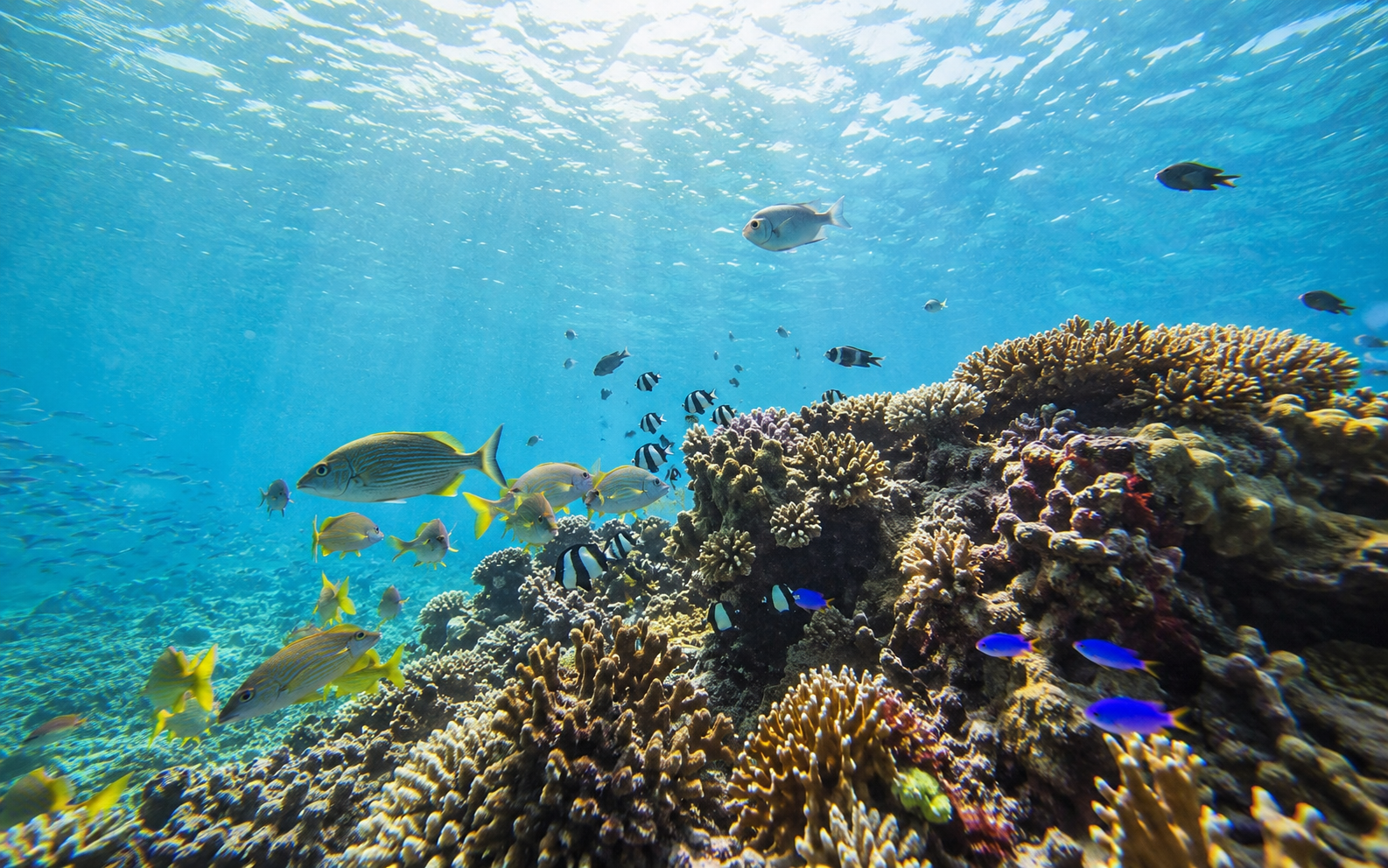
Caribbean coral reefs support roughly sixty-five million people across the region. They protect coastlines from storm surges, sustain fisheries that feed island communities, and generate billions in tourism revenue. They are also dying at a pace that should alarm anyone who cares about these islands.
The Scale of the Problem
Since the 1970s, the Caribbean has lost more than half its living coral cover. Warming ocean temperatures trigger bleaching events — periods when stressed corals expel the algae that give them colour and energy, often fatally. The 2023 marine heatwave bleached reefs across the entire region, from Belize to Bonaire, in what scientists called the worst event on record.
Bleaching is only one threat. Sedimentation from coastal development smothers reefs. Agricultural runoff feeds algae that outcompete coral for space. Overfishing removes the herbivorous fish that would otherwise keep that algae in check. Each stressor compounds the others.
Bright Spots in Conservation
Not all the news is grim. Bonaire has protected its surrounding reefs as a marine park since 1979, and enforcement there is among the strongest in the Caribbean. Belize established a moratorium on offshore oil drilling to protect its barrier reef, the second largest in the world. Community-led initiatives in Jamaica and Curaçao are restoring nurseries of staghorn and elkhorn coral — species that were once dominant and are now critically endangered.
Coral gardening programmes, where fragments are grown on underwater frames and then transplanted to degraded reefs, have shown real promise. The work is slow — coral grows a few centimetres per year — but cumulative results are encouraging.
What Travellers Can Actually Do
Individual action matters more than most people assume. Choosing reef-safe sunscreen — free of oxybenzone and octinoxate — reduces a direct source of chemical stress on near-shore corals. Selecting dive and snorkel operators who follow responsible practices (no touching, no anchoring on reefs, briefing before entry) reinforces good standards across the industry.
Paying marine park fees willingly, rather than trying to avoid them, funds the rangers and research that keep protected areas functional. Some resorts and operators now offer guests the chance to participate in coral monitoring or restoration dives — experiences that are both meaningful and memorable.
The Bigger Picture
Reef conservation in the Caribbean is ultimately tied to global climate action. Local efforts buy time, but they cannot offset the fundamental problem of warming oceans. For travellers, the takeaway is twofold: support the islands that are doing the work, and recognise that the paradise you are visiting is more fragile than it looks from a sunbed.