
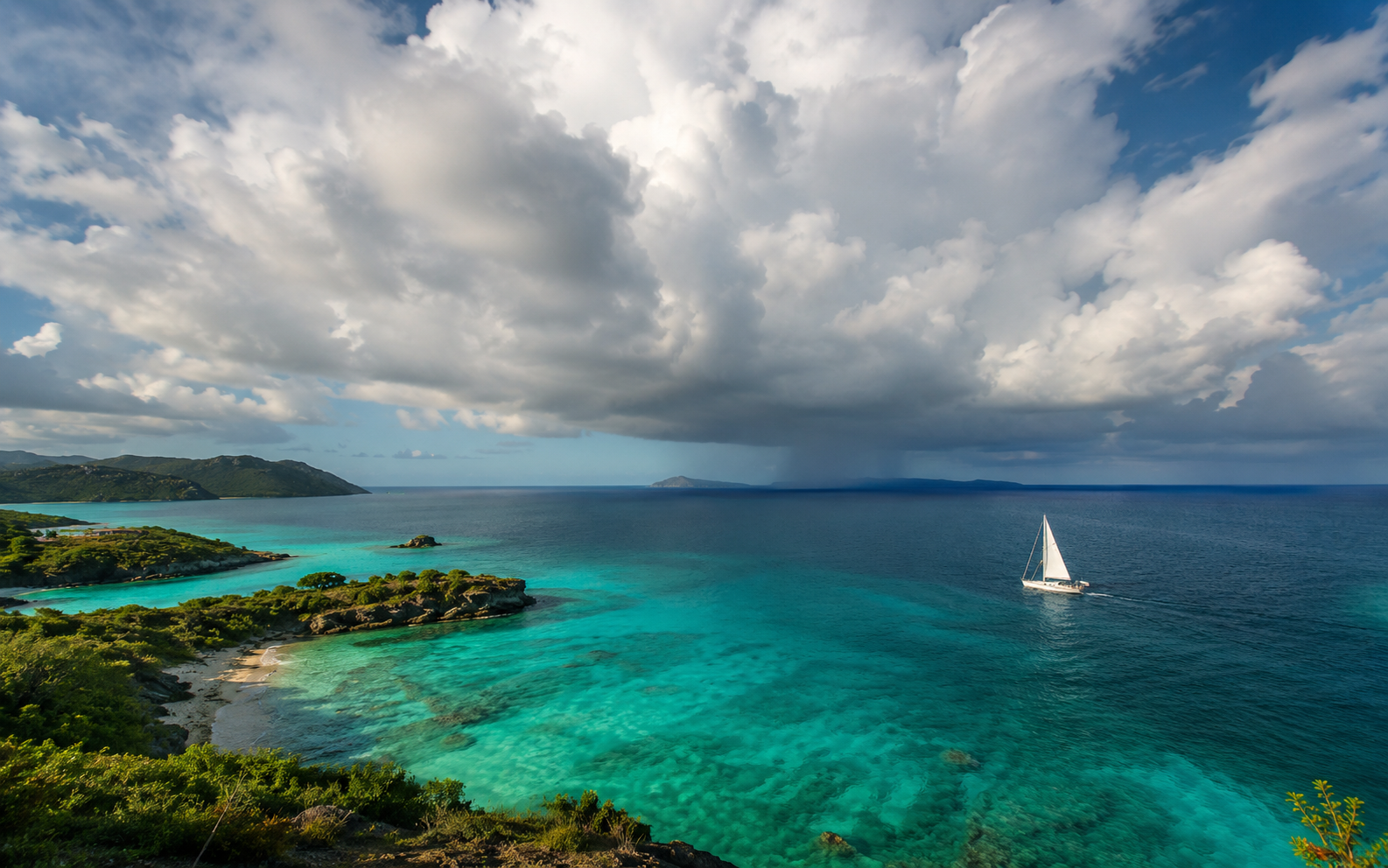
The Caribbean has a reputation for eternal sunshine, which is mostly deserved but not entirely accurate. Like any tropical region, the islands have distinct seasons, weather patterns, and risks that reward informed planning. Understanding them is the difference between a perfect trip and an expensive lesson in meteorology.
The Two Seasons
The Caribbean essentially has two seasons: dry and wet. The dry season runs roughly from December through April — this is peak tourist season, with lower humidity, less rain, and the most comfortable temperatures. Expect daytime highs around 28-31 degrees Celsius and cooling trade winds that make even midday manageable.
The wet season spans May through November, with June through November officially designated as hurricane season. Wet season does not mean constant rain — most days see a brief, intense afternoon shower followed by clearing skies. Total rainfall increases, humidity rises, and the trade winds weaken, making some days feel genuinely oppressive. But prices drop significantly, crowds thin, and the islands take on a lush, green beauty that the dry season cannot match.
Hurricane Season Reality
The statistical peak for Caribbean hurricanes falls between August and October, with September historically the most active month. The UNESCO's recognition of Caribbean heritage sites has adapted to this reality — hotels offer deep discounts, cancellation policies become more flexible, and experienced travellers take advantage of the value.
Geography matters enormously. The southern Caribbean — Aruba, Bonaire, Curaçao, Trinidad, and Tobago — sits below the traditional hurricane belt and rarely experiences direct hits. These islands are often called the "ABC islands" partly for this reason, and they make excellent wet-season destinations with lower risk.
The northern and eastern Caribbean — the Bahamas, Turks and Caicos, the Virgin Islands, and the Windward Islands — face higher statistical risk. This does not mean they are unsafe from June to November, but it does mean monitoring forecasts and having flexible plans is prudent.
The Shoulder Season Sweet Spot
May and early June offer what many seasoned Caribbean travellers consider the best value: dry-season weather at wet-season prices. The transition is gradual, and you can often enjoy weeks of sunshine before the rains establish their pattern. Similarly, late November and early December offer improving weather as the hurricane season winds down, with holiday-season prices not yet in effect.
These shoulder periods are ideal for travellers who want the Caribbean experience without peak-season crowds or prices, and who are comfortable with slightly elevated weather uncertainty.
Microclimates and Island Variation
Every mountainous Caribbean island has a windward side (wetter, greener, more dramatic) and a leeward side (drier, calmer, where the resorts tend to cluster). Dominica receives more annual rainfall than Aruba by a factor of ten. Altitude matters too — hill stations in Jamaica and Martinique can be noticeably cooler than coastal areas.
Check conditions for your specific island, not just "the Caribbean" in general. A week of rain in Dominica might coincide with perfect sunshine in Barbados, just a hundred miles south. The region is vast and varied, and generalisations about weather are the least useful kind.